
HELICOPTERS

Bell 212
Bell 212
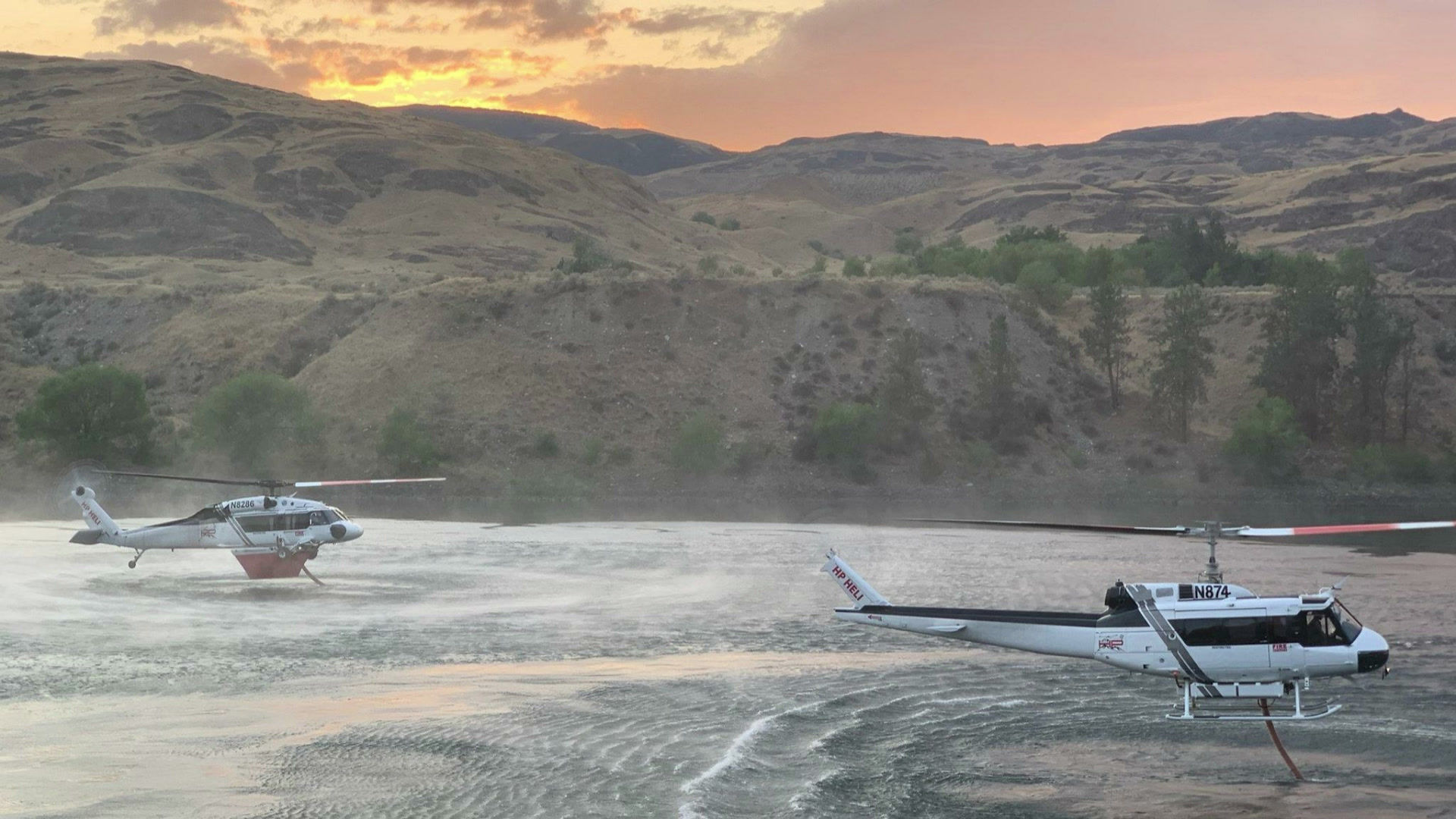
Whether we are setting utility poles in a steep mountain canyon, delivering remote construction materials, supporting aerial firefighting operations, or conducting offshore vessel resupply, the Bell 212 is purpose-built for exactly the kind of hot, high, and heavy work that defines our operation.
Applications
The extended range, payload capacity, advanced avionics and reliable offshore operations make it ideal for aerospace research and development along with remote area construction for power lines, water and other infrastructure related projects.
Specifications
-
Engines: 2 Pratt & Whitney Canada PT6T-3B "Twin Pac" coupled twin turbine
-
Combined Takeoff Power: 1,800 SHP
-
Maximum Gross Weight: 11,200 lbs
-
External Load Capacity: Up to 3,500 lbs (sling load)
-
Internal Payload: Up to 4,000 lbs
-
Maximum Speed (Vne): 130 knots (150 mph)
-
Service Ceiling: 14,200 ft (OGE hover ~8,000–10,000 ft at max gross weight, density altitude dependent)
-
Fuel Capacity with aux fuel tank is 305 gallons
-
Seating: Up to 14 passengers + 2 crew (utility configuration)
-
Dual Cargo Hooks: HEC Cargo secondary cargo hook system
Why the Bell 212?
When HP evaluated adding a twin-engine medium helicopter to our fleet, the Bell 212 was the clear choice. We are not interested in aircraft that perform adequately under ideal conditions — we need equipment that performs at the outer edge of the envelope, every time. The Bell 212 does exactly that. Its twin-engine design is not just a safety feature; it is a performance advantage. The combined output of the PT6T-3B "Twin Pac" powerplant allows the aircraft to maintain impressive payload capacity along with maintaining redundancy.
The airframe itself is a direct evolution of the Bell 205 that our crews know and trust. That familiarity translates directly to safety, efficiency, and reduced maintenance time in the field. When your crew can diagnose, repair, and return an aircraft to service faster, your mission moves faster.
The twin engine helicopter is ideally suited for mission's where you need to fly your crew into remote locations either on board the aircraft or at the end of a long line and then support them with delivering and precision placing heavy loads. Instead of using a light single engine helicopter that can only deliver crew and then utilize a second medium helicopter for the load placement, you can save money by utilizing one helicopter that does it all and gain the added advantage of twin-engine safety especially valuable during crew transport mission.


